Across rural Rwanda, thousands of young people wake up each morning facing the same quiet crisis, not a lack of ambition, but a lack of opportunity. They are energetic, willing to work, and hungry for a better life. What many of them lack is access to the practical skills that connect hard work to a sustainable income.
Youth unemployment and underemployment remain among the most pressing challenges in sub-Saharan Africa. According to the International Labour Organisation (ILO), young people in Africa are more than twice as likely to be unemployed as adults, and those living in rural areas face even steeper barriers to economic participation.
In Rwanda, while significant national progress has been made through the government’s Vision 2050 development agenda, many young people in remote districts like Kirehe still find themselves on the margins of economic life.
Skills training changes that equation.
When a young person learns a trade, such as tailoring, carpentry, hairdressing, agriculture, or another practical vocation, they do not simply gain a skill. They gain agency. They gain the ability to generate income, support their families, and contribute meaningfully to their communities. They gain, in the truest sense of the word, independence.
At International Samaritan’s Heart Rwanda, this conviction sits at the very heart of our work. Through our vocational training programs in Kirehe District, we are walking alongside vulnerable youth, including orphans, children of widows, and young people from extremely poor households and equipping them with the tools they need to build a self-sustaining future.
Why Youth Economic Independence Matters
Before exploring how skills training delivers results, it is worth understanding why youth economic independence matters so deeply not just for individual young people, but for entire communities.
When young people cannot earn a stable income, the consequences ripple outward in every direction. Families fall deeper into poverty. Young men become vulnerable to recruitment into criminal networks or extremist groups. Young women face heightened risks of early marriage and gender-based violence. Children in the next generation grow up in households where food security is uncertain and education is unaffordable.
The World Bank estimates that if Africa fails to harness its youth population through education and employment, the continent risks losing its greatest demographic asset. Conversely, when young people are economically empowered, they invest back into their families and communities. They send children to school, seek healthcare when needed, and gradually build the kind of stable household foundations that lift entire families out of intergenerational poverty.
In Rwanda specifically, the government has recognised this dynamic through flagship programs like Hanga Umurimo — a national initiative designed to stimulate entrepreneurship and self-employment among youth.
However, government programs alone cannot reach every corner of every district. That is where faith-based organisations and community-level NGOs like International Samaritan’s Heart Rwanda play an irreplaceable role.
What Skills Training Actually Delivers
Vocational skills training is sometimes misunderstood as a simple, low-level intervention — a short course that teaches someone to sew or cut hair. In practice, when it is designed and delivered well, it delivers something far more transformative.
Practical, Marketable Competencies
At its most basic level, skills training equips young people with competencies that have direct market value.
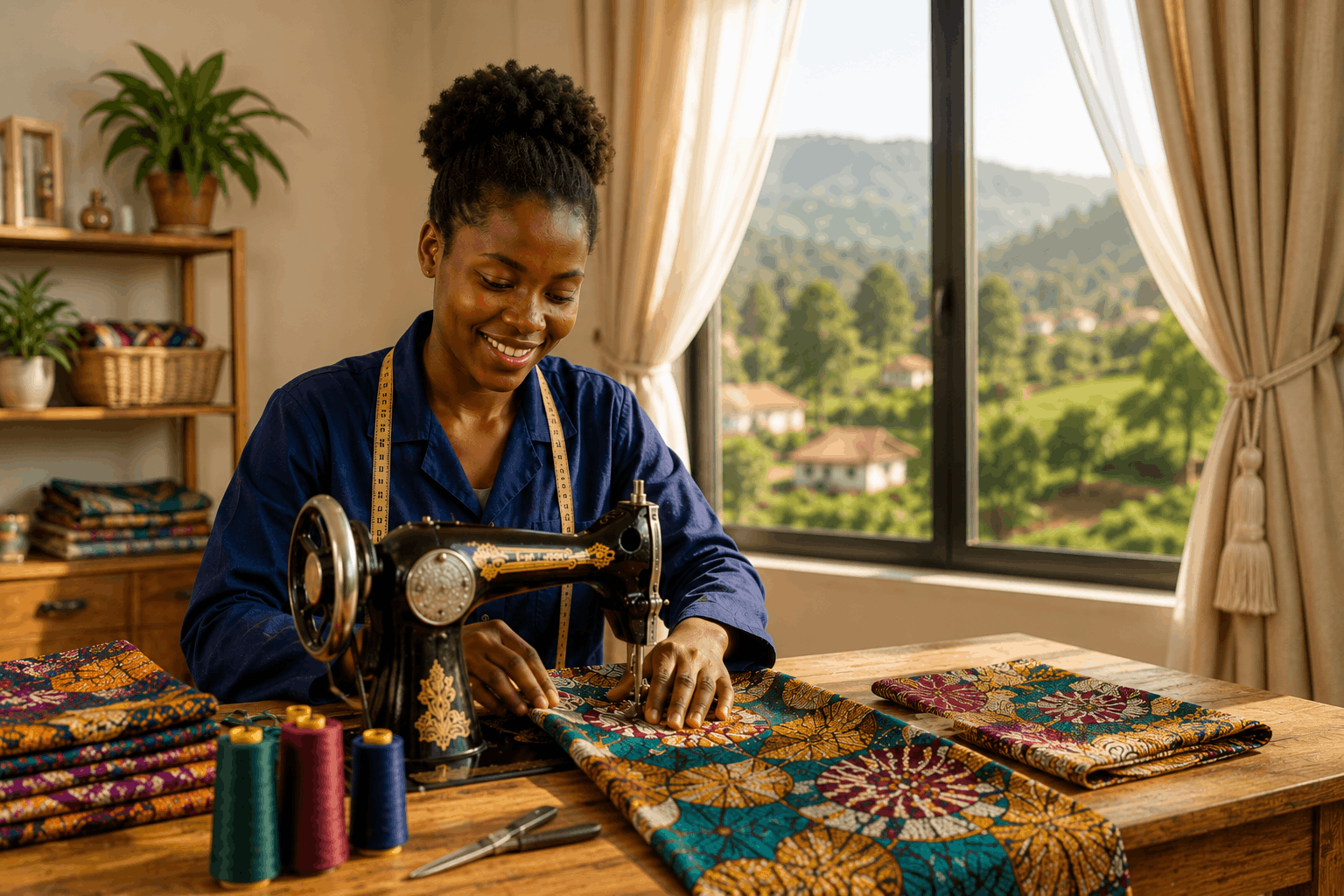
A young woman who completes a tailoring course does not just know how to sew; she knows how to measure, cut, construct, and finish garments to a standard that customers will pay for. She understands how to price her work, manage basic materials, and serve clients.
These are not abstract academic skills. They translate directly into income.
Through our vocational training programs at International Samaritan’s Heart Rwanda, we have seen this play out firsthand. Graduates of our tailoring program, many of them young women from the most vulnerable households in Kirehe, have gone on to establish their own small enterprises, employ other community members, and become consistent providers for their families.
As Grace M., one of our vocational training graduates, shared:
“Thanks to the tailoring program, I can now support my family and have hope for a brighter future.”
Confidence and Self-Worth
The psychological dimension of skills training is just as important as the technical one.
Many of the young people we work with arrive having been told directly or indirectly that they have no future. Poverty, orphanhood, and social marginalisation all take a toll on a young person’s sense of self-worth.
Completing a vocational training program rebuilds that self-worth in tangible, visible ways. There is something deeply powerful about finishing a garment, constructing a piece of furniture, or successfully completing a professional service for a paying client.
It says, in a language that no textbook can replicate, that you are capable. That you have value. That your future is yours to shape.
This shift in confidence is not a side effect of skills training; it is one of its most important outcomes.
Community Belonging and Support Networks
Skills training programs, when delivered within a community setting, also create peer networks that provide ongoing support long after the formal training ends.
Young people who train together share resources, refer clients to each other, encourage each other through business challenges, and form the kind of social bonds that reduce isolation and strengthen community cohesion.
At International Samaritan’s Heart Rwanda, our training programs are intentionally relational. We believe that restoring hope means building community, not just transferring skills.
This is rooted in our Christian faith and our commitment to serving the whole person, not just their economic needs.
The Specific Challenges Facing Youth in Kirehe District
Kirehe District sits in Eastern Rwanda, bordering Tanzania. It is one of Rwanda’s more remote and economically vulnerable districts, where access to services, including quality education, healthcare, and economic opportunity, remains limited compared to urban centres like Kigali.
Young people in Kirehe face several compounding barriers to economic independence:
Geographic Isolation
Distance from markets, training centres, and employers makes it difficult for rural youth to access mainstream economic opportunities without external support.
Orphanhood and Family Disruption
Many young people in Kirehe grew up in households affected by the 1994 Genocide against the Tutsi, HIV/AIDS, or other forms of family breakdown.
Without stable parental support, they often lack the financial backing and social capital needed to access training or start a business.
Limited Formal Education
While Rwanda has made impressive gains in primary school enrolment, many vulnerable youth in rural districts do not complete secondary education and lack the formal qualifications that salaried employment requires.
Vocational training offers an alternative pathway — one that does not depend on academic credentials.
Gender Inequality
Young women in rural Rwanda face additional barriers, including social expectations around domestic roles, limited mobility, and reduced access to start-up capital.
Targeted vocational training that addresses these barriers — and pairs skills with mentorship and peer support is essential.
These are exactly the young people that International Samaritan’s Heart Rwanda was established to reach. Our programs are not designed for those who already have advantages — they are designed for those who have been left behind.
How Skills Training Leads Directly to Economic Independence
The connection between skills training and economic independence is not automatic — it depends on how training is designed, delivered, and followed up.
Based on our experience on the ground in Kirehe, the most effective pathways work as follows:
Training with market relevance
Business and financial literacy education
Access to tools and start-up support
Mentorship and alumni networks
Ongoing spiritual and emotional support
When these elements work together, vocational training becomes more than education — it becomes transformation.
Our Impact So Far
To date, International Samaritan’s Heart Rwanda has empowered over 500 youth through our skills training and related programs.
These are young people who arrived without income, without hope, and in many cases without a stable family structure — and who have gone on to generate their own livelihoods, support their dependents, and actively contribute to their communities.
Beyond the numbers, the stories are what drive us forward.
Young women like Jeanne U., who came to us as a widow feeling completely hopeless, found not only skills and support but a community that genuinely cares.
“This organization gave me skills, support, and a community that cares.”
These stories are not exceptions. They are what skilled, sustained, and compassionate vocational training produces when it is grounded in genuine love for the people it serves.
How You Can Support Youth Skills Training in Rwanda
The work of equipping vulnerable youth for economic independence is only possible with the support of partners, donors, and volunteers who share our vision.
Here is how you can get involved:
Donate to support vocational training materials and starter kits
Become a partner organisation
Volunteer your expertise
Share our mission with your network
Every contribution helps restore dignity, hope, and opportunity to vulnerable youth across Rwanda.
Conclusion
The link between skills training and economic independence for youth is not theoretical. It is proven, personal, and urgent.
Every young person who completes a vocational training program and builds a sustainable livelihood represents:
One less family trapped in poverty
One more community strengthened
One more life restored to dignity and hope
At International Samaritan’s Heart Rwanda, we believe this is exactly the kind of practical, compassionate service that the story of the Good Samaritan calls us to.
We stop.
We help.
We walk alongside.
And we invite you to do the same.
Support our youth empowerment programs today and help us reach more vulnerable young people across Rwanda.
Compassion vs. Charity: Why the Difference Matters in Mission Work
How Tailoring Skills Are Helping Young Women Escape Poverty in Rwanda
Related Articles
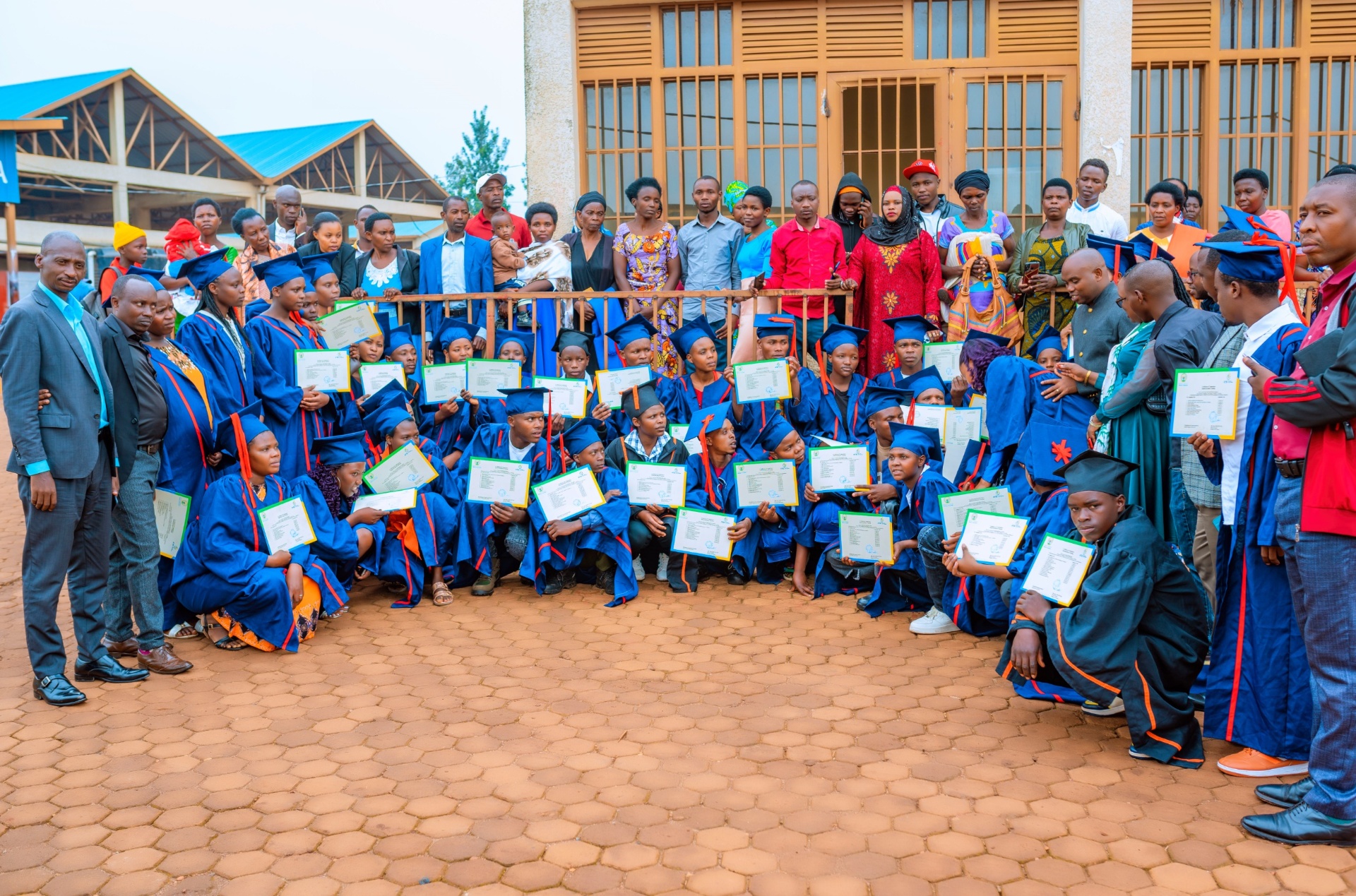
Graduation Ceremony Celebrates New Skilled Youth
A large graduation ceremony celebrated dozens of youth who completed vocational training programs.
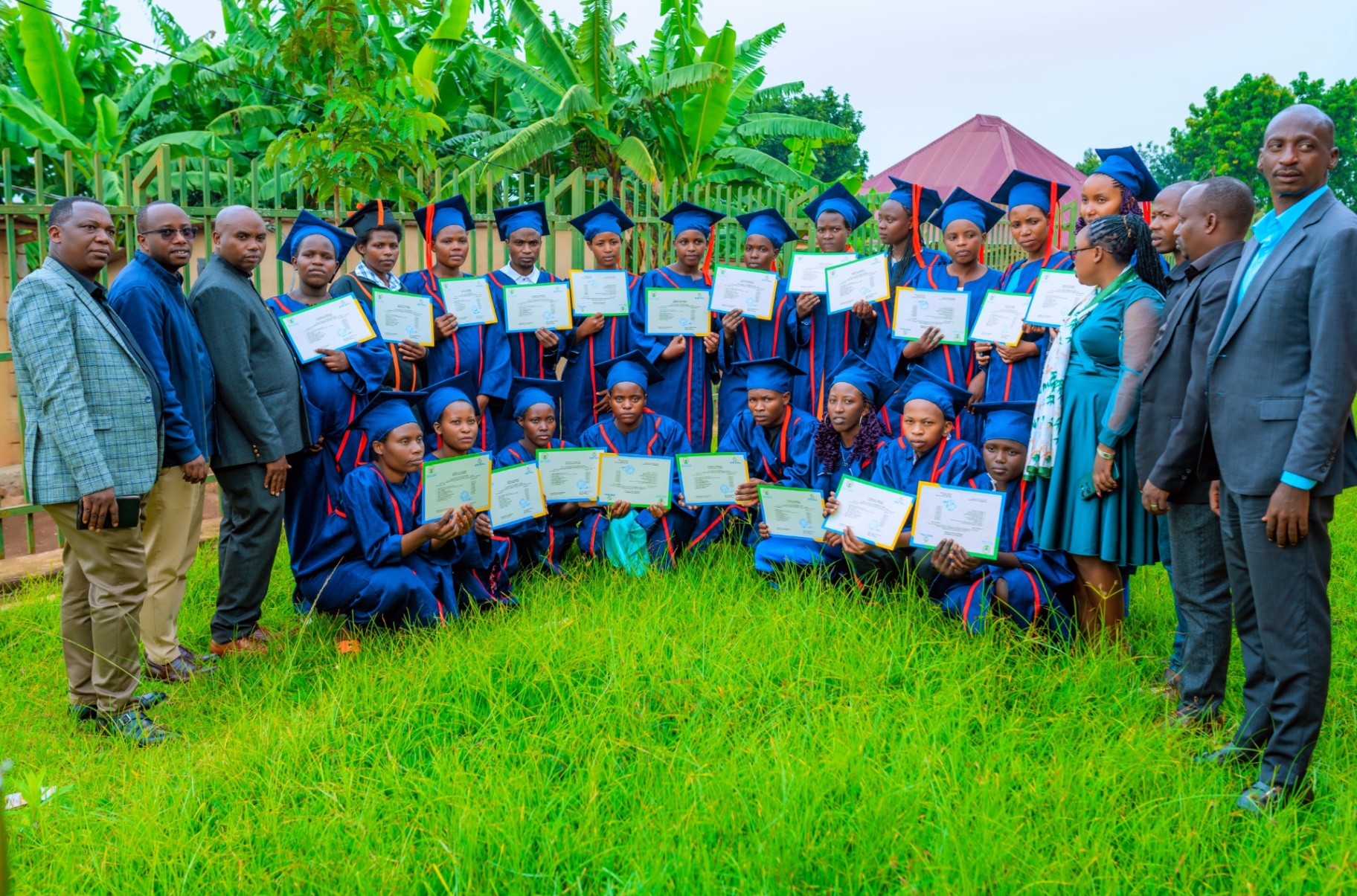
New Tailoring Graduates Ready to Transform Their Lives
Our latest cohort of tailoring students have completed their training and are now equipped to start their own businesses and support their families.